

Artificial intelligence is rapidly transforming the nature of warfare. Military forces are increasingly relying on machine learning, autonomous systems, and AI-assisted decision making to analyze data, identify threats, and coordinate operations faster than ever before.
From AI-powered drones to predictive battlefield analysis, modern conflicts are entering a new era where algorithms and data processing play a critical role. However, despite the technological advantages, experts warn that AI cannot replace human judgment in war.
The Growing Role of AI in Military Operations
Modern warfare produces enormous amounts of data. Satellites, surveillance drones, radar systems, and sensors constantly collect information from the battlefield. Artificial intelligence allows military systems to analyze this data far more quickly than human analysts.
For example, the U.S. Army is experimenting with AI systems that combine data from drones and sensors to create a real-time “common operating picture” of the battlefield. These systems can identify enemy vehicles, classify threats, and suggest priorities for commanders. (Popular Mechanics)
The purpose of these systems is not to replace soldiers but to help them process complex information more efficiently and make faster decisions.
Autonomous Weapons and Military Robots
One of the most significant developments in AI warfare is the emergence of autonomous or semi-autonomous weapons.
Examples include:
- AI-guided drone swarms
- robotic ground combat vehicles
- autonomous surveillance drones
- AI targeting systems
Robotic combat vehicles such as unmanned tanks and ground robots are already being developed. These machines can operate alongside human soldiers, scout dangerous areas, and even fire weapons remotely. (Popular Mechanics)
Such systems could allow militaries to send machines into high-risk areas instead of human troops.
AI on Aircraft and Military Platforms
Artificial intelligence is also being integrated into aircraft and advanced military systems.
In one historic test, the U.S. Air Force flew a spy plane with an AI copilot controlling some of the aircraft’s systems during flight. This demonstrated how AI could support pilots by managing complex operations and responding faster in high-pressure situations. (Popular Mechanics)
Future systems may allow pilots to control drones, sensors, and weapons with AI-assisted interfaces, dramatically improving situational awareness.
AI in Modern Conflicts
Recent conflicts show how quickly AI is entering real-world warfare.
A 2026 report in the journal Nature explains that artificial intelligence is already being used by militaries for intelligence analysis, logistics planning, and battlefield decision support. Some systems are based on technologies similar to large language models used in modern AI tools. (Nature)
The article highlights how the growing role of AI in conflicts involving the United States, Israel, and Iran has sparked debate about the ethical limits of AI-driven military technology.
Even as AI systems help analyze data and identify targets, the final decisions are typically made by human commanders.
The Ethical and Strategic Concerns
While AI offers clear advantages, it also raises serious concerns.
Some experts warn that autonomous weapons could make warfare faster and more unpredictable. If machines are allowed to select and attack targets independently, mistakes could lead to civilian casualties or unintended escalation of conflicts.
Many researchers and technology leaders have called for international regulations on AI weapons. They warn that autonomous weapons could become a new revolution in warfare similar to nuclear weapons or chemical weapons. (Popular Mechanics)
Another risk is the possibility of an AI arms race, where countries compete to develop increasingly advanced autonomous weapons without clear international rules.
My Perspective. AI Will Change How Wars Are Fought
In my opinion, the biggest impact of AI in warfare will not come from robots alone. Instead, it will come from information dominance.
The military that can analyze information fastest will have the greatest advantage.
AI systems can detect patterns in data, predict enemy movements, and help commanders make faster strategic decisions. However, relying too heavily on automated systems could create dangerous situations if algorithms make incorrect judgments.
Human oversight will remain essential.
AI should be viewed as a powerful tool for military decision-making rather than a replacement for human responsibility.
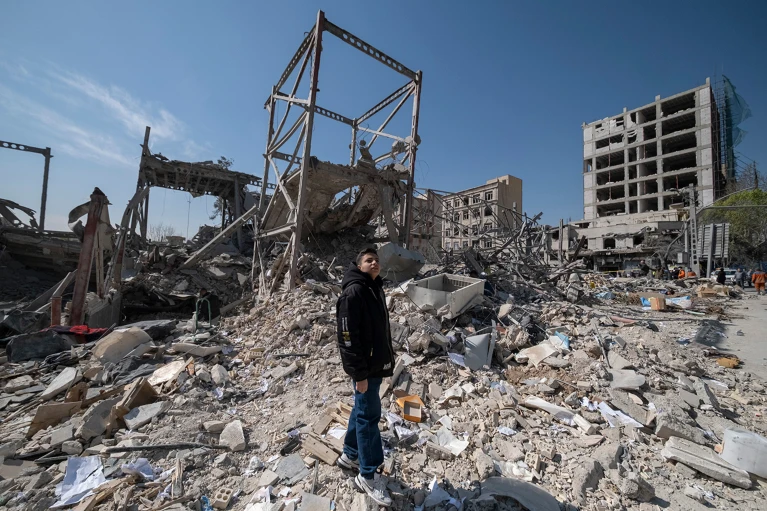
The Future of AI Warfare
Artificial intelligence will continue to reshape the battlefield in the coming decades.
Possible future developments include:
- autonomous drone swarms coordinating attacks
- AI-driven cyber warfare operations
- intelligent missile defense systems
- robotic ground vehicles supporting soldiers
At the same time, governments and international organizations are beginning to discuss regulations to ensure that AI weapons remain under meaningful human control.
The challenge for the future will be balancing technological innovation with ethical responsibility.
Sources
- Popular Mechanics reporting on AI and robotic military systems
- AI-assisted battlefield intelligence systems (Popular Mechanics)
- Robotic combat vehicles and unmanned warfare platforms (Popular Mechanics)
- AI copilot experiments in military aircraft (Popular Mechanics)
- Nature article on AI’s role in modern conflicts (Nature)
- Debate around banning autonomous weapons (Popular Mechanics)