 11
11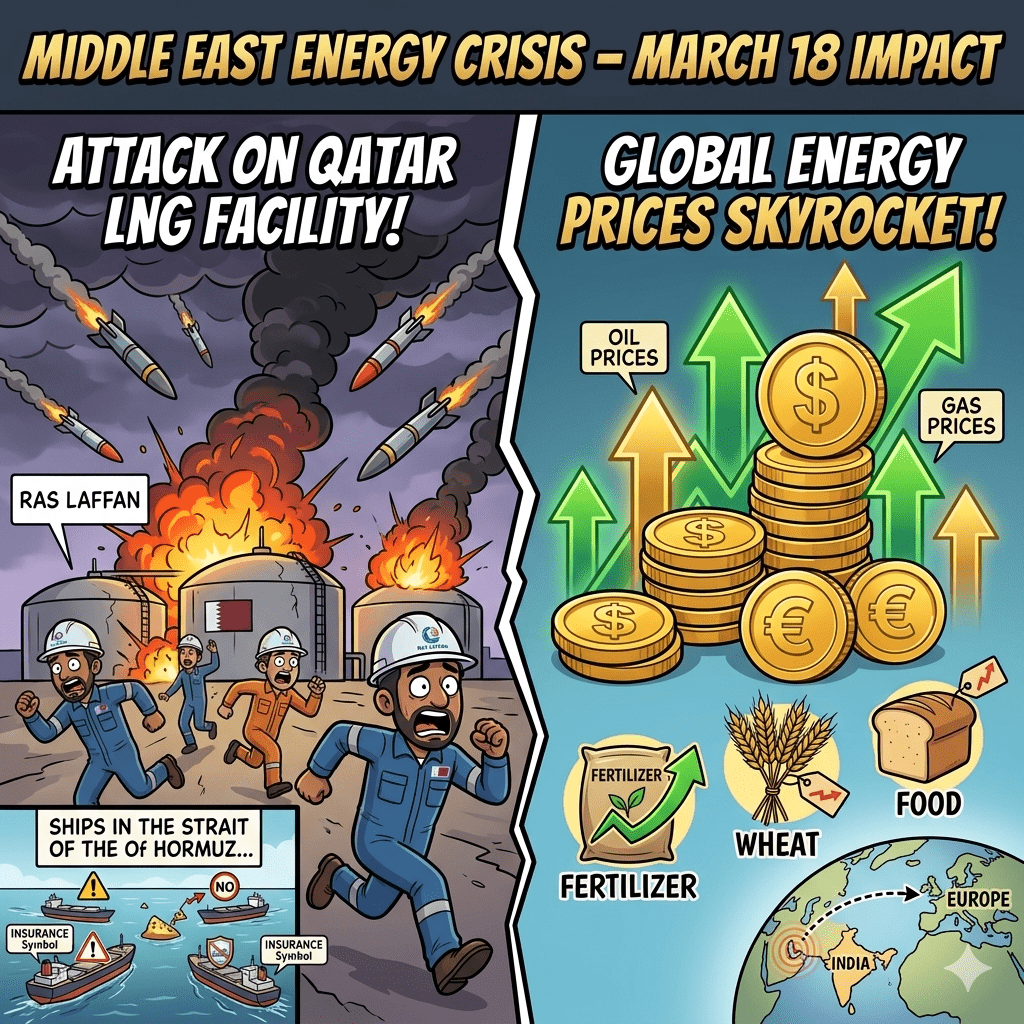
On March 18, the Middle East experienced a sharp escalation in its ongoing energy crisis. A rapid exchange of attacks between Iran and Israel targeted critical energy infrastructure, raising global alarm over oil prices, LNG supply, and even food security.
This article breaks down the crisis, the key players, and the potential global ramifications.
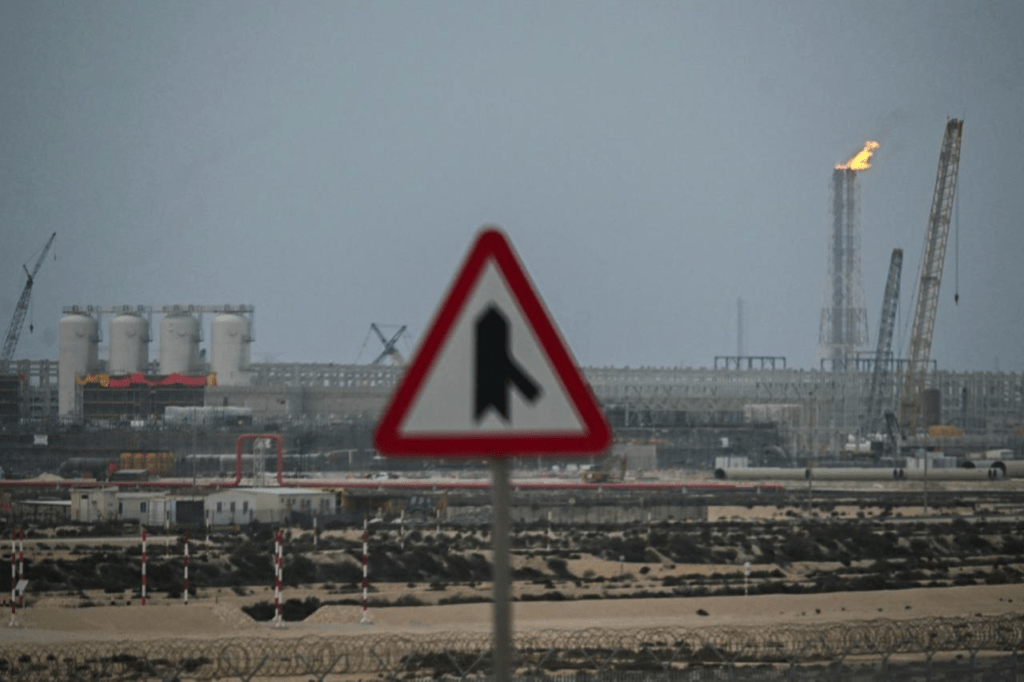
The crisis began when Iran launched ballistic missiles at Qatar’s Ras Laffan industrial zone, home to the world’s largest LNG facility. The site was already partially offline, but the strike caused significant new damage, putting additional pressure on global energy markets.
The strike was a retaliation for Israeli airstrikes on Iran’s South Pars gas field, coordinated with the White House. The rapid tit-for-tat escalation highlighted the vulnerability of critical energy infrastructure in the region.
Qatar reacted decisively. The Qatari government declared Iran’s military and security attaches persona non grata, giving them 24 hours to leave the country.
Official statements emphasized that the strike:
This response signaled that Qatar would not tolerate attacks on its energy infrastructure and could escalate the conflict diplomatically or militarily if provoked again.
The conflict intensified further with the assassination of key Iranian officials, including Ali Larijani. Removing these potential diplomatic off-ramps reduced the possibility of negotiation and made a sustained conflict more likely.
Donald Trump publicly threatened that if Iran attacks Qatar’s gas hub again, the United States would obliterate the entire South Pars gas field, illustrating the global stakes of regional conflicts over energy.
The strikes immediately impacted energy markets:
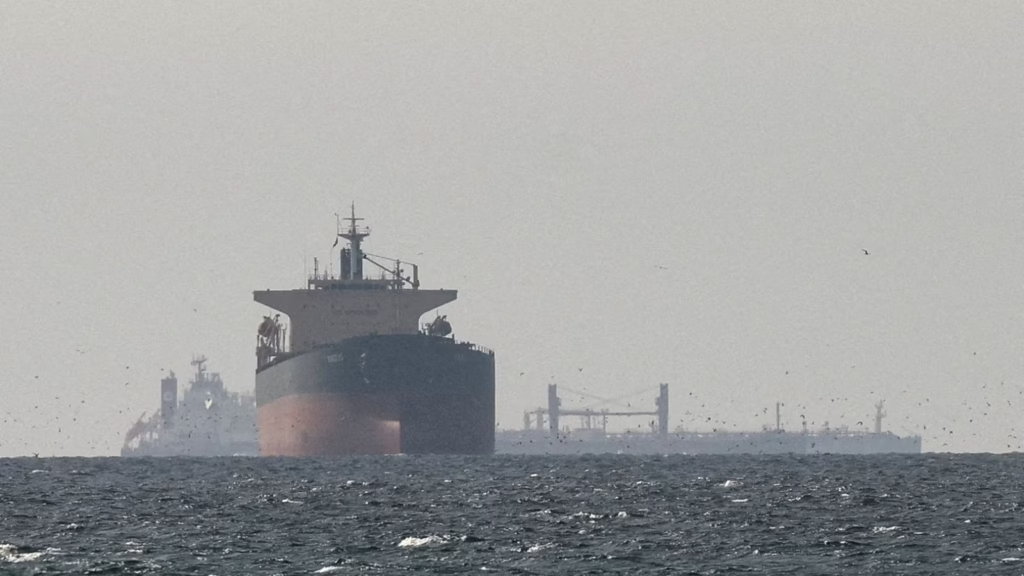
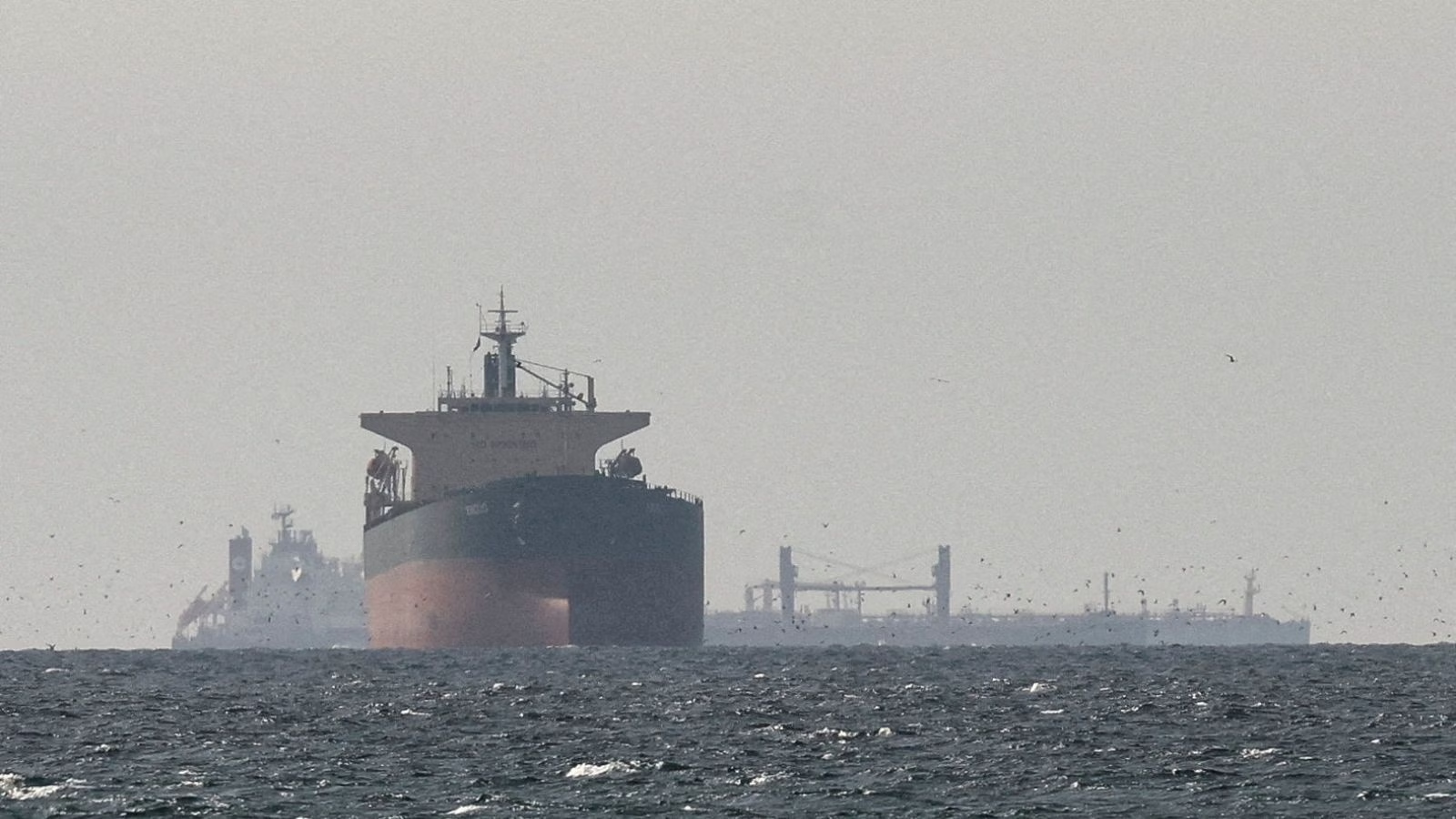
Additionally, the Strait of Hormuz, a critical shipping route, was effectively compromised. Shipping companies face insurance risks and commercial hesitation, threatening the safe transport of LNG, crude oil, and other commodities.
The disruption isn’t limited to energy alone. LNG from the region feeds nitrogen-based fertilizer production, which is essential for growing staple grains that supply over 40% of global calories.
The compromised shipping route threatens global food security:
This connection underscores how energy crises can ripple outward, threatening basic human necessities worldwide.
Shared geography amplifies the conflict:
These factors make diplomatic solutions difficult, heightening global economic risk.
With Ali Khamenei’s succession and the assassination of key officials, Iran’s internal politics are in flux. Reduced diplomatic flexibility increases the likelihood of further strikes. Analysts warn that continued attacks on energy infrastructure could trigger wider geopolitical instability.
The March 18 escalation demonstrates that regional conflicts in the Middle East have far-reaching implications:
The world is watching closely. Decisions made in the next few days could determine whether this remains a regional energy crisis or spirals into a global economic and humanitarian disaster.